Plugged Back In: The Surprising Reason Younger Viewers Are Giving Cable Another Shot

For about a decade, ditching cable felt like a rite of passage. You canceled your bloated Comcast bill, downloaded a few apps, and told yourself you'd never look back. Streaming was the future. Cable was your parents' problem.
Except now? Some of those same people are calling their cable provider back.
It sounds absurd. It sounds like the plot of a bad tech cautionary tale. But the data and the anecdotes are starting to line up in a way that's hard to ignore: a measurable chunk of millennials — the generation that supposedly killed cable in the first place — is quietly reconsidering the whole deal.
The Bill That Stopped Making Sense
Let's start with the most obvious culprit: money.
When Netflix was $8 a month and Hulu was barely a thing, cord-cutting math was simple. You dropped a $120 cable bill, picked up one or two streaming services, and came out way ahead. That math doesn't work anymore.
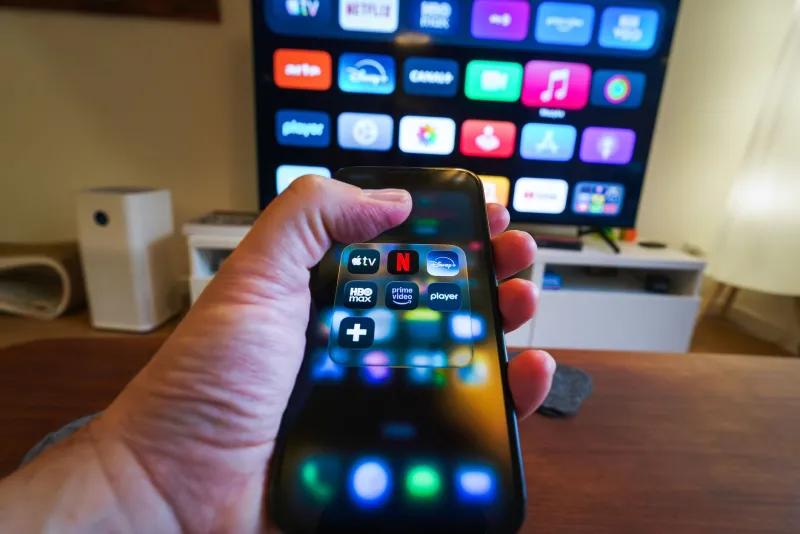
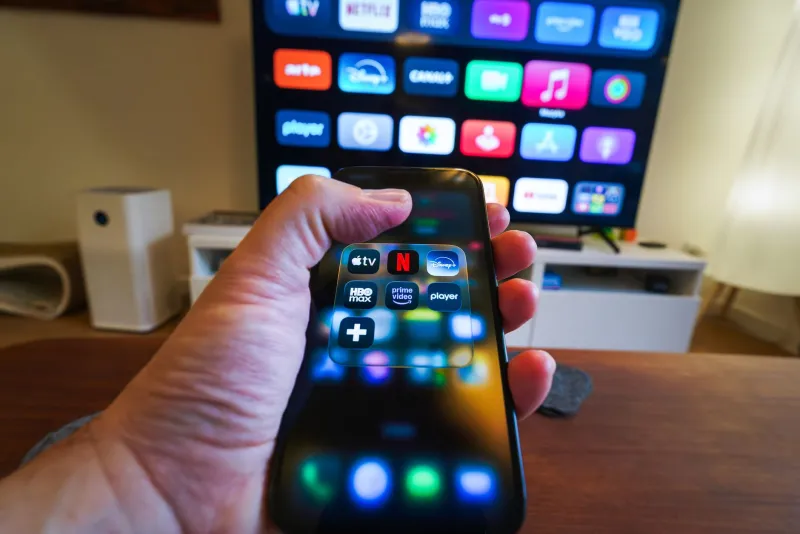
Today, the average American household subscribes to four or more streaming platforms. Netflix's most popular ad-free tier runs $15.49 a month. Max, Peacock, Paramount+, Disney+, Apple TV+ — add them up and you're easily looking at $60 to $80 a month before you've even thought about a live sports add-on or a premium channel upgrade. Throw in a YouTube TV or Hulu Live subscription for local news and sports, and suddenly you're paying more than the cable bill you canceled.
Marcus T., a 34-year-old graphic designer in Atlanta, figured this out the hard way last year. "I sat down and actually added it all up for the first time in years," he said. "I was paying $94 a month for streaming. My buddy still has cable and pays $89. I felt like an idiot."
He's not alone. That kind of math is pushing more people back toward bundled TV packages — especially as cable and satellite providers have gotten smarter about offering slimmer, more competitive plans.
The Discovery Problem Nobody Warned You About
Here's the thing streaming platforms don't advertise: finding something to watch has become genuinely exhausting.
Cable had its issues, sure. But flipping through channels had a certain low-effort charm. You landed on something. You watched it. Done. Streaming replaced that with an endless scroll of thumbnails, algorithmic rabbit holes, and the creeping anxiety that the best thing to watch is hiding somewhere in a platform you haven't subscribed to yet.
Researchers have actually studied this — it's sometimes called the "paradox of choice" in action. The more options you have, the harder it becomes to commit to any of them. Streaming services have mountains of content, but the discovery tools to navigate that content haven't kept pace.
Jamila R., a 29-year-old teacher in Chicago who recently added a basic cable package back to her setup, put it simply: "I just wanted to turn on the TV and have something on. Streaming made that feel like homework."
Live TV — cable's core product — solves this by design. Something is always on. You don't have to decide. For a generation that's increasingly burned out and decision-fatigued, that passivity is starting to feel less like a downgrade and more like a feature.
Sports, News, and the Live TV Gap
Streaming has made serious inroads on scripted content. But two massive categories — live sports and breaking news — have remained stubbornly difficult to access without a traditional TV package.
Sports rights remain one of cable's most powerful trump cards. While streaming platforms have grabbed pieces of the pie (Amazon's Thursday Night Football, Apple TV+'s MLS deal, Peacock's Sunday Night Football exclusives), the full picture of live sports is still scattered and expensive to assemble à la carte. For someone who wants to watch NFL Sunday games, NBA playoffs, college football, and baseball without hunting across five different apps, cable still offers a more complete solution.
News is a similar story. During major events — elections, natural disasters, national emergencies — live cable news becomes appointment viewing in a way that streaming simply can't replicate. CNN, MSNBC, Fox News, and local affiliates still draw enormous audiences when something is actually happening.
For younger viewers who grew up streaming but are now buying homes, starting families, and settling into routines, these gaps matter more than they used to.
Is This a Real Trend or Just Noise?
Fair question. Industry analysts are careful not to overstate the reversal.
Pay-TV subscriber numbers are still declining overall. The long-term trajectory hasn't reversed — cable is still losing customers year over year. But the rate of decline has slowed in some markets, and providers like Charter (Spectrum) and Comcast have reported surprising retention numbers in certain demographics, including younger subscribers.
What's more telling is the rise of virtual MVPDs — services like YouTube TV, DirecTV Stream, and FuboTV — which are essentially cable delivered over the internet. These platforms grew significantly over the past two years, and their fastest-growing user segment skews millennial. If you're paying $72 a month for YouTube TV, you've effectively returned to cable. You're just streaming it.
So the "return to cable" isn't always a literal one. Sometimes it's a philosophical one: an acknowledgment that the live, linear TV model has real value that pure on-demand streaming never fully replaced.
What Streaming Got Wrong
Platforms like Netflix, Hulu, and Max built their businesses on a powerful promise: watch what you want, when you want, without the filler. And for a while, that was genuinely revolutionary.
But somewhere along the way, the filler came back — just in a different form. Endless libraries full of content nobody asked for. Recommendation engines that loop you back to the same three shows. Originals greenlit and canceled before anyone could finish them. And a pricing structure that punishes loyalty.
Streaming also underestimated how much people actually like shared cultural moments. When everyone's watching the same show at the same time — a finale, a live event, a breaking news story — there's a social energy that on-demand consumption can't manufacture. Cable, for all its flaws, was always good at that.
The Bottom Line
The streaming revolution isn't over. Nobody serious is arguing that. But the idea that streaming was a clean, permanent replacement for everything cable offered? That's looking shakier by the month.
Younger viewers are doing the math, feeling the fatigue, and making practical decisions. Some are going back to traditional cable. Others are landing on hybrid setups — a streaming service or two plus a virtual live TV package. Either way, the behavior is a clear signal to the industry: convenience isn't just about access. It's about simplicity, cost, and actually being able to find something worth watching.
The platforms that figure that out first will be the ones worth keeping around.