Block, Detect, Repeat: Inside the Escalating War Between Streaming Platforms and VPN Users
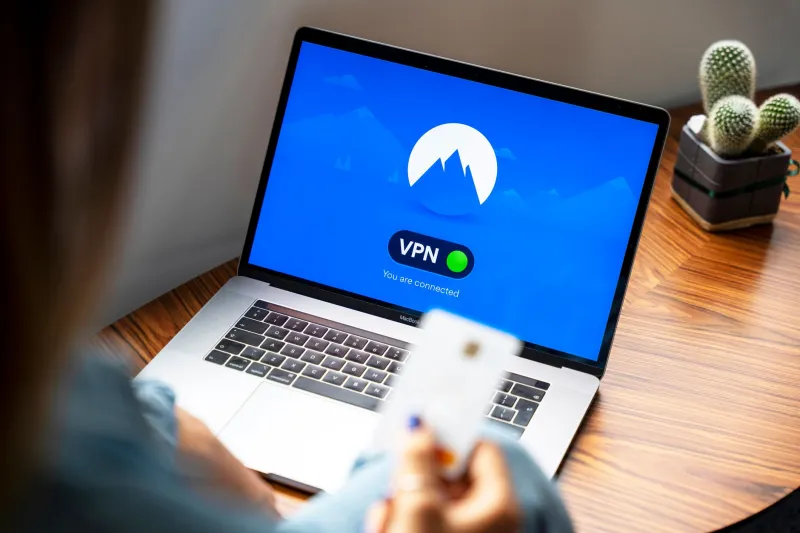
Picture this: you're an American living abroad for six months, or maybe you're just a privacy-conscious viewer who keeps a VPN running by default. You open up your streaming app, and instead of your show, you get an error message. Your account is fine. Your internet is fine. But the platform has decided that your IP address looks suspicious, and you're locked out until you prove you're not trying to game the system.
Welcome to the new streaming battlefield.
What began as a fairly targeted crackdown on password sharing has expanded into something much broader — a systematic effort by major platforms to detect, flag, and block VPN traffic entirely. The technology is getting more sophisticated on both sides. And the unintended consequences are starting to pile up in ways that should concern anyone who cares about how the internet actually works.
Why Platforms Started Caring So Much About VPNs
To understand the current crackdown, you have to understand the licensing structure that drives it.
When a streaming platform acquires rights to a film or series, those rights are almost always territorial. A show that's available on Netflix in the US might be licensed to a completely different broadcaster in Germany, Australia, or Brazil. The platform's licensing agreements typically require them to enforce those geographic restrictions — meaning they're contractually obligated to make sure US-licensed content isn't being accessed from markets where someone else holds the rights.
VPNs, which route your internet traffic through servers in other countries, make it trivially easy to appear as though you're browsing from anywhere in the world. For viewers, this is often just about accessing content that's unavailable in their home region. For platforms, it's a licensing compliance headache with real legal and financial stakes.
The account-sharing crackdown added a new dimension. When Netflix and others started requiring subscribers to verify their "home" location, VPNs suddenly became a tool not just for geo-hopping but for evading household verification systems entirely. That's when the platforms' detection efforts shifted into a higher gear.
How the Detection Actually Works
This is where it gets technically interesting.
The simplest VPN detection method is IP reputation checking. Most commercial VPN services route traffic through data center IP addresses — the kind that belong to Amazon Web Services, Google Cloud, or other hosting providers rather than residential internet service providers. Platforms maintain databases of known data center IP ranges and simply block connections coming from them.
But VPN providers adapted. Many now offer "residential IP" plans, where traffic is routed through actual home internet connections — often via networks of users who've agreed to share their bandwidth. These IPs look exactly like a regular subscriber's connection, making them much harder to flag.
Platforms responded with behavioral analysis. Instead of just checking where your traffic comes from, they look at patterns — does this account suddenly appear to be logging in from three different countries in 24 hours? Does the device fingerprint match what we'd expect from a household in the registered zip code? Is the DNS configuration consistent with a VPN tunnel?
The result is a layered detection system that's constantly being updated. Netflix, Disney+, and others work with third-party fraud detection firms specifically to stay ahead of VPN technology. It's not a static blocklist — it's an ongoing intelligence operation.
The Legal Gray Area Nobody Wants to Talk About
Here's where things get murky.
Using a VPN in the United States is completely legal. Full stop. There is no federal law prohibiting VPN use, and the technology has legitimate applications in privacy protection, corporate security, and journalism. The FTC and FCC have both acknowledged VPNs as legitimate privacy tools.
What's legally murkier is whether using a VPN to access content in violation of a streaming platform's terms of service constitutes a meaningful legal violation. Platform terms of service typically prohibit circumventing geographic restrictions, but ToS violations are a civil matter, not a criminal one — and platforms would have to demonstrate actual damages to pursue individual users, which they essentially never do.
The Computer Fraud and Abuse Act has occasionally been invoked in discussions about terms-of-service violations, but legal scholars are largely skeptical that routine VPN use would meet the statute's threshold. The platforms know this, which is why their enforcement strategy is technical rather than legal — they'd rather block you than sue you.
The Piracy Problem Nobody's Talking About Enough
Here's the part that should give streaming executives pause: aggressive VPN crackdowns are directly accelerating piracy.
The relationship between content accessibility and piracy is well-documented. When a show is easy to access legally, piracy rates for that show drop. When access is restricted — through geo-blocking, price increases, platform fragmentation, or account lockouts — piracy rates climb. This isn't a moral argument; it's just how consumer behavior works.
For viewers who use VPNs primarily for privacy rather than geo-hopping, blanket VPN blocks are creating a genuinely frustrating experience with their legitimate paid subscriptions. Some are responding by canceling. Others are finding that Torrent sites don't care what your IP address looks like.
The platforms that are most aggressive in their detection and blocking are, in some measurable sense, pushing their own subscribers toward the very behavior they're trying to prevent. It's a self-defeating logic that the industry hasn't fully reckoned with.
Where This Is Headed
The arms race isn't slowing down. VPN providers are investing heavily in residential IP networks and obfuscation technology that makes VPN traffic look indistinguishable from regular browsing. Platforms are investing equally heavily in behavioral AI and third-party detection partnerships.
Somewhere in the middle are millions of regular viewers who just want to watch their shows without a graduate-level understanding of network infrastructure.
The most likely long-term outcome isn't a clear winner — it's a messy equilibrium where sophisticated VPN users stay one step ahead while casual users get caught in the crossfire. Platforms will claim victory on paper while the actual enforcement remains inconsistent and porous.
What's certain is that the viewing experience for privacy-conscious Americans is getting worse, not better. And every time a paying subscriber gets locked out of their account for running perfectly legal software, that's a trust deficit that no amount of content spending can fully repair.
At Cima7, we stream bold — but we also believe viewers deserve to stream smart. Understanding the tech behind these battles isn't just nerdy trivia. It's increasingly essential to knowing your rights as a digital consumer.